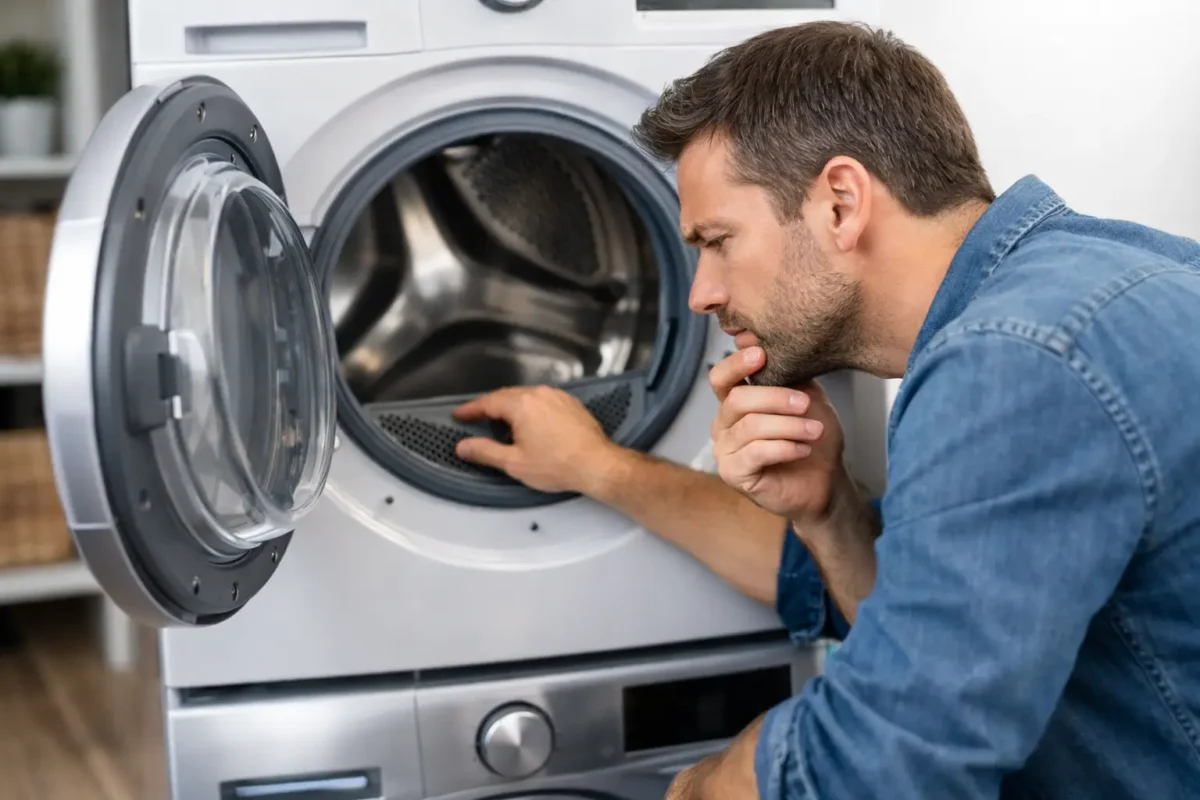
Laundry has a way of breaking down your whole routine. When you are staring at wet clothes and wondering why washing machine dryer not working, the problem usually comes down to a short list of common issues – and some are much easier to fix than others.
If your unit washes but will not dry, or your washer and dryer setup suddenly stops doing one of its jobs, the first thing to know is this: not every problem means you need a replacement. In many cases, the issue is airflow, power, drainage, a settings problem, or a failed part that can be repaired quickly. The key is knowing what you can safely check yourself and what should be left to a professional.
Why washing machine dryer not working in the first place?
People often use this phrase to describe a few different situations. Sometimes the washer works, but the dryer leaves clothes damp. Sometimes the dryer tumbles with no heat. In a combo unit, the machine may wash normally but fail during the drying cycle. And sometimes neither appliance is working the way it should.
That matters because the symptoms point to different causes. A dryer that runs but does not heat is a different problem than a washer that leaves clothes soaking wet because it never fully spun out. To your household, both feel like the same headache – wet laundry that should have been done already – but the repair path is not always the same.
Start with the simple checks
Before assuming the worst, check the basics. It sounds obvious, but these are the issues technicians see every week.
Make sure the appliance has power. A dryer may light up but still have a tripped breaker affecting heat. Confirm the door is closing fully and the cycle actually started. If you have a washer-dryer combo, double-check that the drying cycle was selected and not just the wash cycle.
Then look at the load itself. Overloading is a common reason clothes stay wet or damp. A packed drum does not allow proper tumbling, spinning, or airflow. On the other hand, very small loads can sometimes confuse moisture sensors and stop the cycle too soon.
Settings matter too. Low heat, air fluff, eco dry, or sensor settings can leave heavier items like towels and jeans wetter than expected. If the appliance recently started underperforming, compare the current settings to what normally works for your laundry.
When the washer is really the problem
A lot of people think the dryer failed when the washer is actually leaving too much water in the clothes. If the washer does not drain or spin correctly, the dryer has to work much harder and may still not get the load dry.
One common issue is a clogged drain pump or drain hose. If water cannot leave the machine properly, the spin cycle may be weak or incomplete. That leaves clothes heavy and dripping. You may also notice longer cycle times, standing water in the drum, or a musty smell.
A worn lid switch, door lock, or control issue can also stop the washer from going into high-speed spin. In front-load models, a failing door lock can prevent the cycle from completing correctly. In top-load models, balance problems or suspension wear can keep the machine from spinning out the load fully.
If your clothes come out wetter than usual every time, do not focus only on the dryer. The washer may be the reason your laundry is not finishing the job.
When the dryer runs but clothes still do not dry
This is one of the most common service calls because the dryer appears to work. The drum turns, the timer moves, and everything looks normal. But the clothes are still damp at the end.
In many homes, restricted airflow is the culprit. A clogged lint screen is the easy part, but lint buildup in the vent line is the bigger issue. When hot, moist air cannot escape, drying times stretch out and internal temperatures can rise in ways that strain the machine. In Tucson, where homeowners often run multiple loads back-to-back, this problem can build up fast.
A bad heating element, igniter, thermal fuse, gas valve coil, or thermostat can also stop proper heating. Electric and gas dryers fail in different ways, but the result feels the same – a dryer that runs without doing much drying. If the machine gets warm but not hot, or stops heating partway through the cycle, a failed component is likely.
Moisture sensor problems are another possibility. If the dryer thinks the clothes are dry when they are not, it may shut off early. This tends to happen more with mixed loads, bulky fabrics, or residue buildup on the sensor bars.
Why washer-dryer combo units can be tricky
If you have an all-in-one washer-dryer, diagnosis can be less straightforward. These units save space, but they have more crossover between washing, draining, spinning, heating, and control functions. One issue can affect the whole process.
Poor draining is a major reason combo units fail to dry. If the machine cannot remove wash water completely, the drying stage will struggle or stop. Airflow restrictions, condenser issues, and sensor faults are also common depending on the model.
Combo units also tend to have smaller capacity than separate machines. If the same load size that works for washing is too large for drying, clothes may stay damp even when the appliance is technically functioning. That is not always a breakdown, but it is still frustrating if the machine is not delivering the result you expect.
Brand and model differences matter
Not all laundry appliances fail the same way. GE, LG, Samsung, Whirlpool, Maytag, Bosch, Frigidaire, Kenmore, and Amana each have their own common trouble spots. Some models are more prone to sensor issues. Others are known for heating failures, drain problems, or control board faults.
This is one reason quick guesswork can get expensive. Replacing the wrong part does not solve the problem, and online advice often assumes every machine works the same way. It does not. The right repair depends on the exact symptoms, appliance type, and brand design.
Signs you should stop troubleshooting and call for service
There is a point where trying one more cycle wastes time and adds wear to the machine. If the breaker keeps tripping, the dryer smells hot, the washer will not drain, or the appliance is making loud new noises, it is better to stop using it.
The same goes for repeated error codes, burning smells, or clothes that remain soaked after a full cycle. Those signs usually point to a mechanical or electrical problem that needs proper diagnosis. Continuing to run the appliance can turn a manageable repair into a bigger one.
For households with kids, rentals, or backlogged laundry, speed matters as much as the fix itself. Waiting days to figure it out on your own is not always the cheapest option if the problem is getting worse.
What a professional diagnosis can save you
A good appliance repair visit is not just about changing a part. It is about identifying the actual source of the failure and ruling out related issues. For example, a dryer with poor heat may also have a vent restriction. A washer with a drain problem may also have a worn pump. Fixing only half the problem can leave you right back where you started.
That is why homeowners and property managers usually want clear pricing, a fast appointment, and a technician who has seen the issue before. At Axus Appliance Repair, that is exactly how we approach in-home service – straightforward diagnosis, affordable repair options, and help getting your laundry routine back on track without unnecessary delays.
A repair often makes more sense than replacement
When laundry appliances stop working right, many people immediately wonder if it is time to buy new. Sometimes it is. But often, the better move is a repair, especially if the machine is otherwise in decent condition and the issue is isolated to a heating part, sensor, drain component, or switch.
Replacement gets expensive quickly, and it does not solve the immediate inconvenience of installation, haul-away, and schedule disruption. A solid repair can restore normal performance much faster and at a much lower cost.
If you are trying to figure out why washing machine dryer not working, start with the simple checks, pay attention to whether the washer or dryer is really causing the problem, and do not ignore warning signs that point to a deeper issue. Wet clothes are annoying, but the right fix is often closer than it seems – and getting your appliance working again can be a lot easier than replacing it.